Tattoosays: Redesigning A HK Tattoo Media Platform Connecting Artists and Enthusiasts
Client: Tattoosays
Role
Product Strategy / Product Design / User Research
Team size
5
3 Owners, 1 Designer (myself), 1 Engineer
Duration
2022, ~3 months
Overview
Tattoosays is a Hong Kong tattoo media outlet with almost 50k followers on Instagram. They want to help tattoo artists not only rely on the Instagram algorithm but also support the artists to grow their visibility on the platform and connect with new customers. However, the owner was not happy about their 1.0 version website outcome due to the in-completed function, so they were asking to redesign the MVP platform for them to relaunch it.
Challenge
During stakeholder interviews, the owners had many new feature ideas that they wanted to achieve, mostly towards the tattoo artist's side. However, they lacked insights into the other side of the users, tattoo lovers, which they were not aware of, and it had the potential to create an expectation mismatch for the full experience. Also, they had a limited budget. While they were looking for experience improvement, they were also looking for more new features.
How can I help them?
I took the lead to help them define the better user goal on both sides of the users. Also, I helped them prioritize the features and needs for the upcoming launch.
Progress
To identify the real user problem and not just rely on the owner's "wishlist", I ran 2 parts of user interviews. The first was for the tattoo artists' side, the other one was for the tattoo lovers' side, and I used the insights to help shape the V2.0 product and also prioritize the features.
In both user interviews, we also asked the interviewees what they thought about Tattoosays as a brand and what they would care about the most in terms of using a new platform. This insight could help us to determine the website's direction.
🧑🎨
The tattoo artist
Interview sample sizes: 5
We tried to understand how tattoo artists were currently promoting themselves and showcasing their work, how they would have liked to describe their tattoo style, and how clients usually approached them. We also gathered feedback on 'Tattoosay V1.0' from early adopters who found crucial UX errors, and we improved it for version 2.0.
💁
The tattoo enthusiast
Interview sample sizes: 5
Tattoo enthusiasts possessed varying levels of knowledge when searching for tattoo references. We had identified two distinct types of users among tattoo lovers and were attempting to understand their search behaviors. Additionally, we were testing the v1.0 website to determine if users could successfully find their desired styles or references.
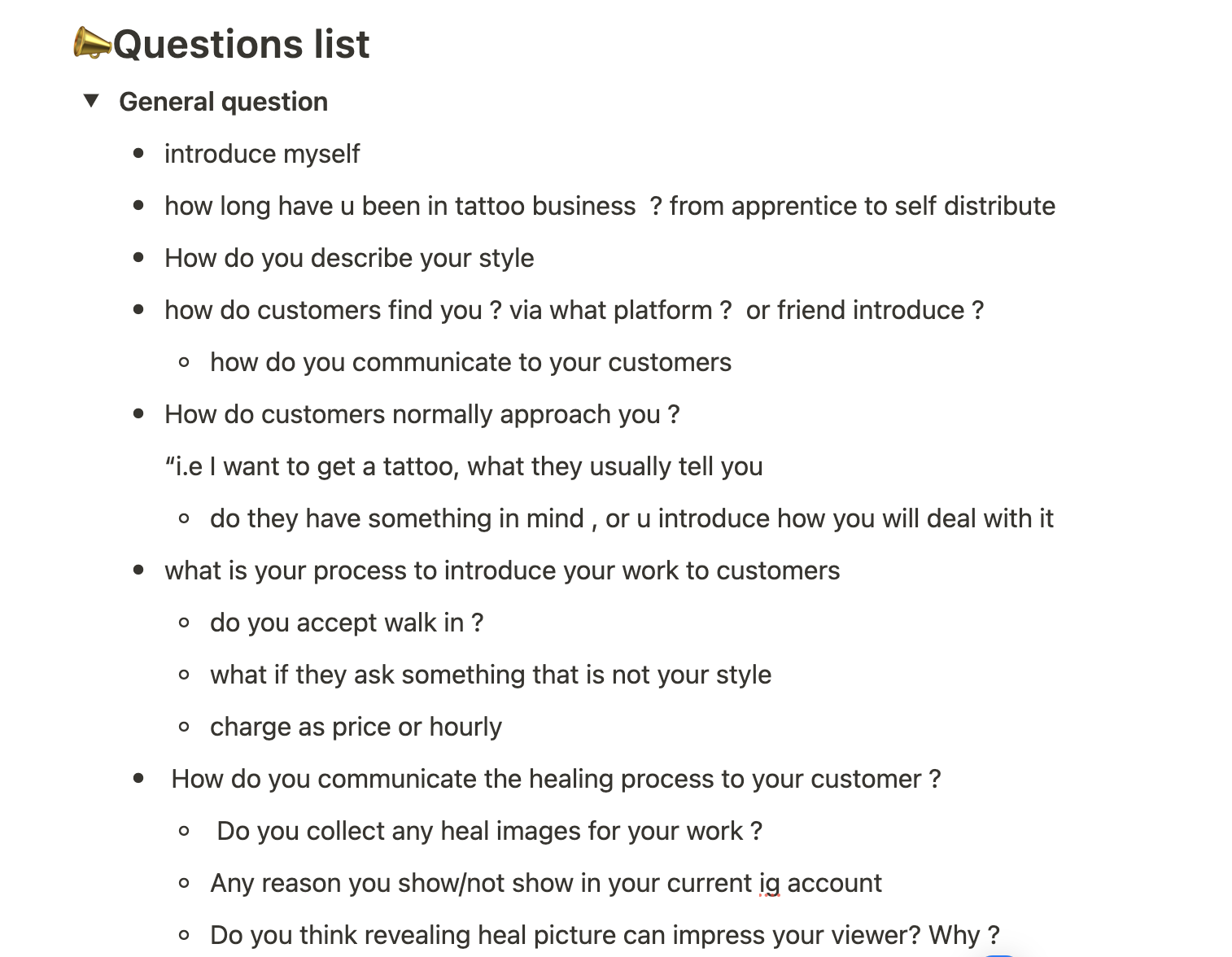
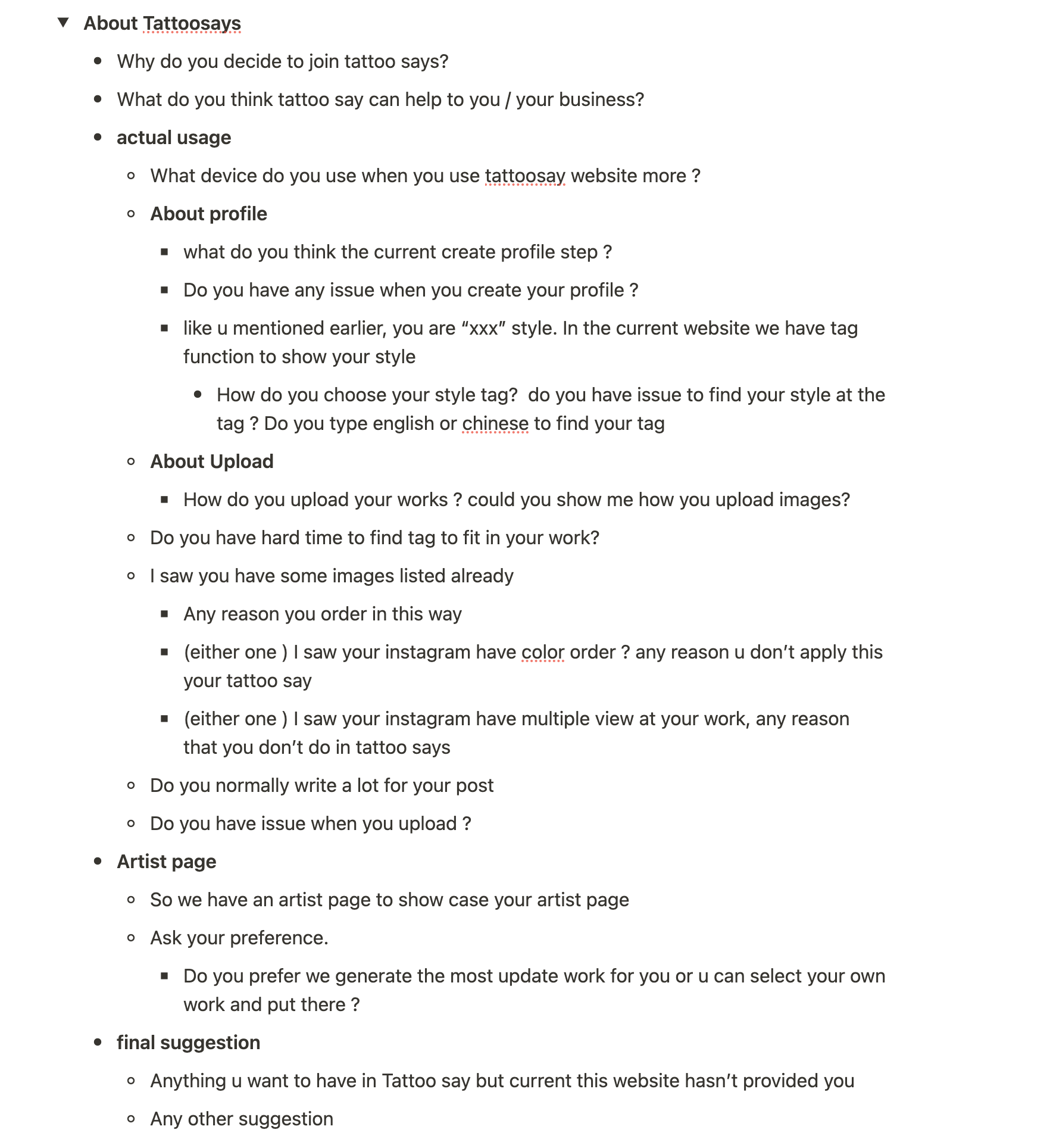
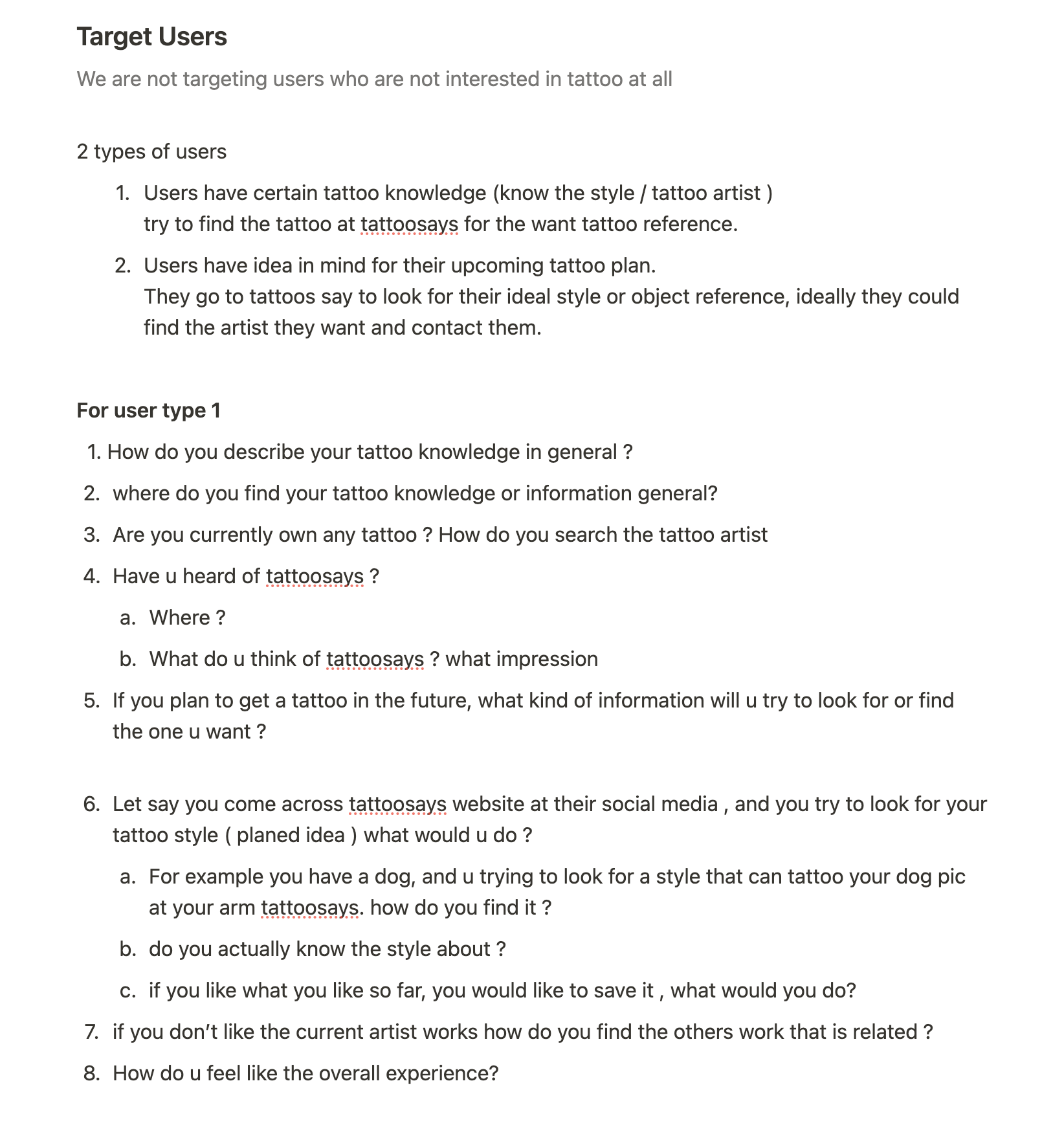
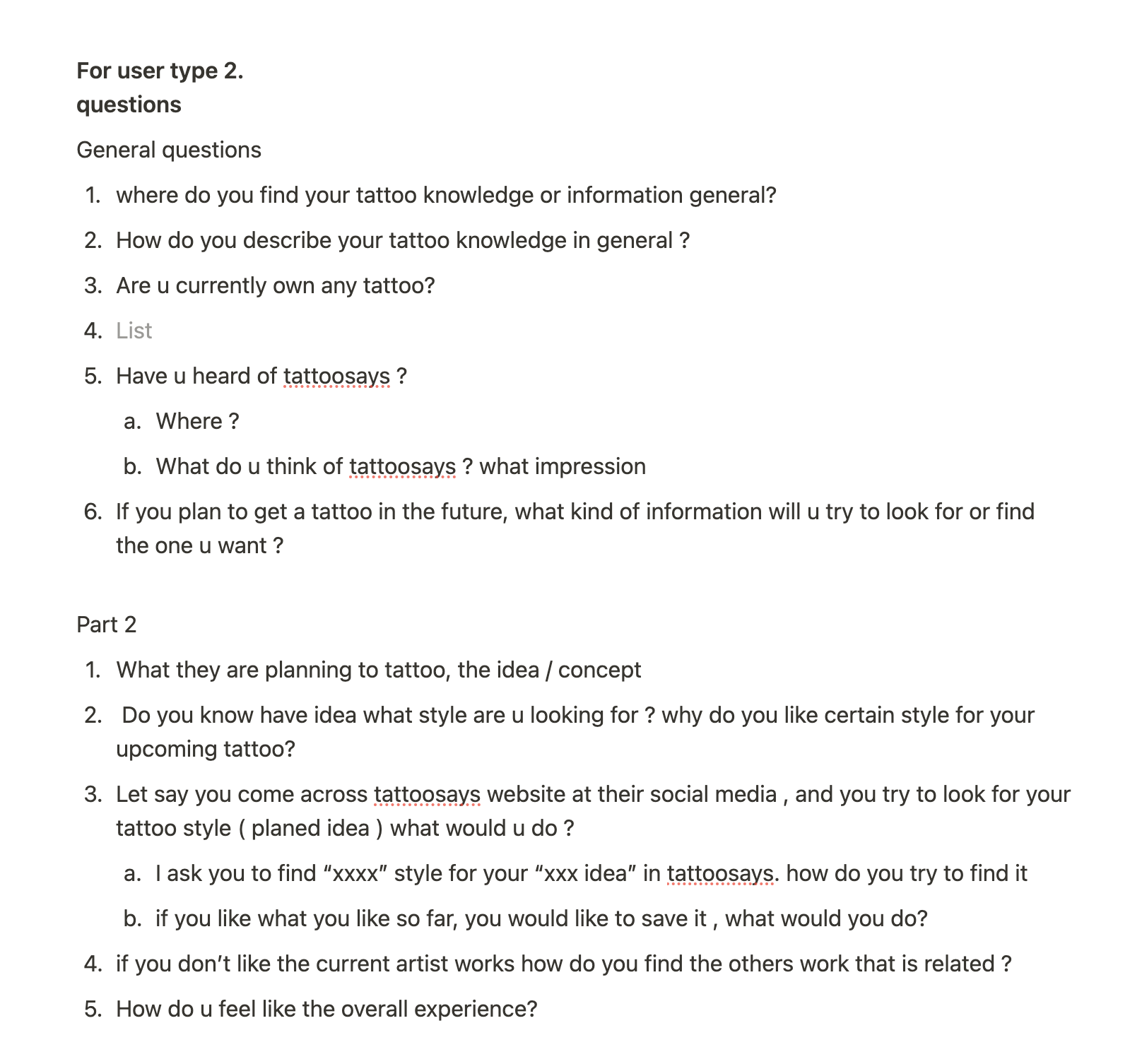
Interview questions from 2 user groups interview sections
Highlighted Insights
Tattoo artists👨🎨 : “ It is hard to find the tag I want to describe my style … “
Tattoo enthusiast A 💁 : ” I see Tattoosays is an educational resource…”
Tattoo enthusiast B 👩 : ”I don’t have much art background. The filter and search functions
are hard to find the style I want…”
Direction prioristation : education
Tattoo artists primarily viewed Tattoosays as a centralized platform for local, rather than a commercial venture. They appreciated its role in facilitating customer discovery compared to platforms like Instagram. Artists believed enhancing the platform's educational resources on tattoo culture could improve their customer base and business growth.
While artists perceived Tattoosays as an educational resource and artist database, they were facing daily challenges with customer interactions. The general public often lacked an understanding of tattoo processes, appropriate artist communication, and pre/post-tattoo care.
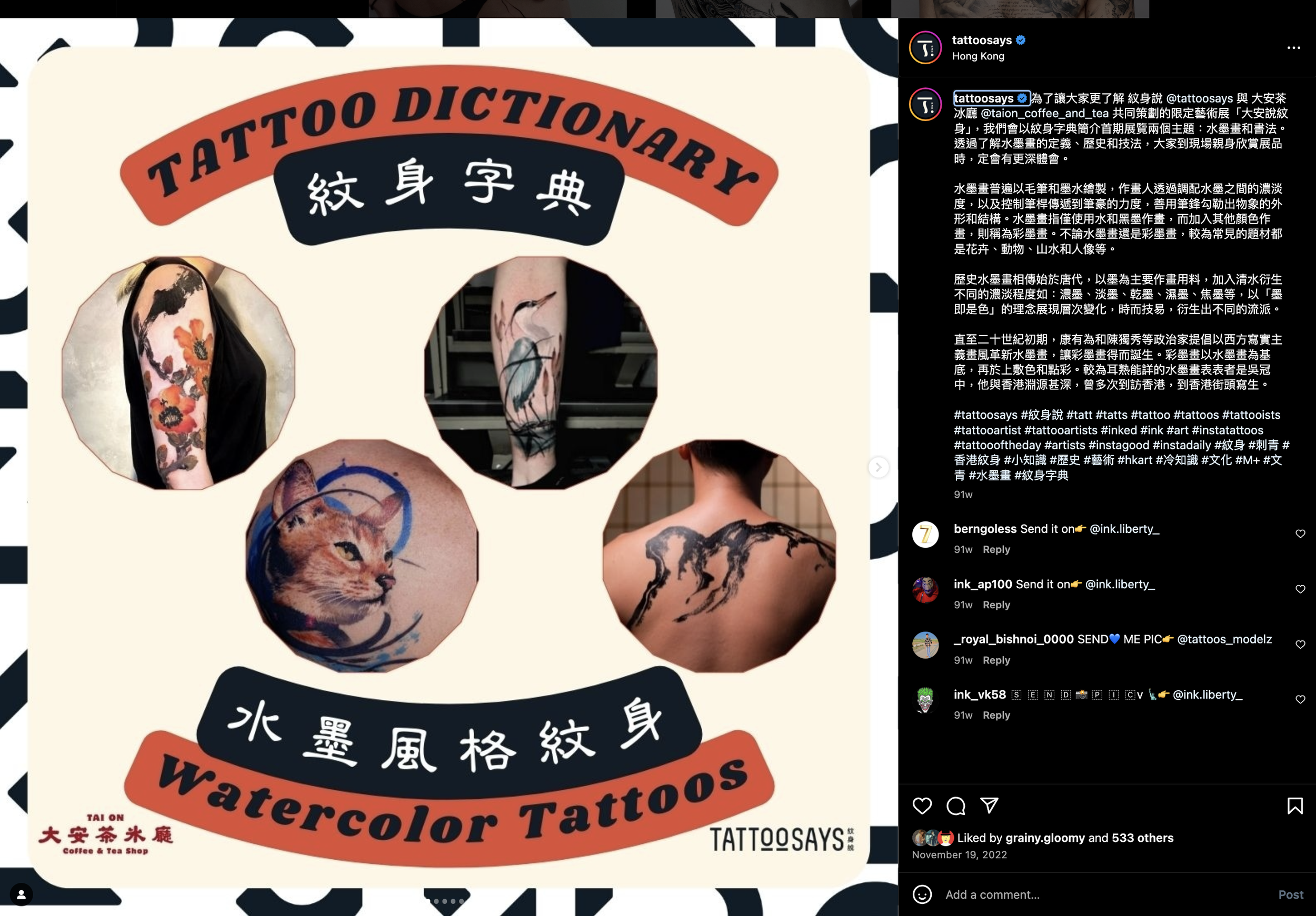
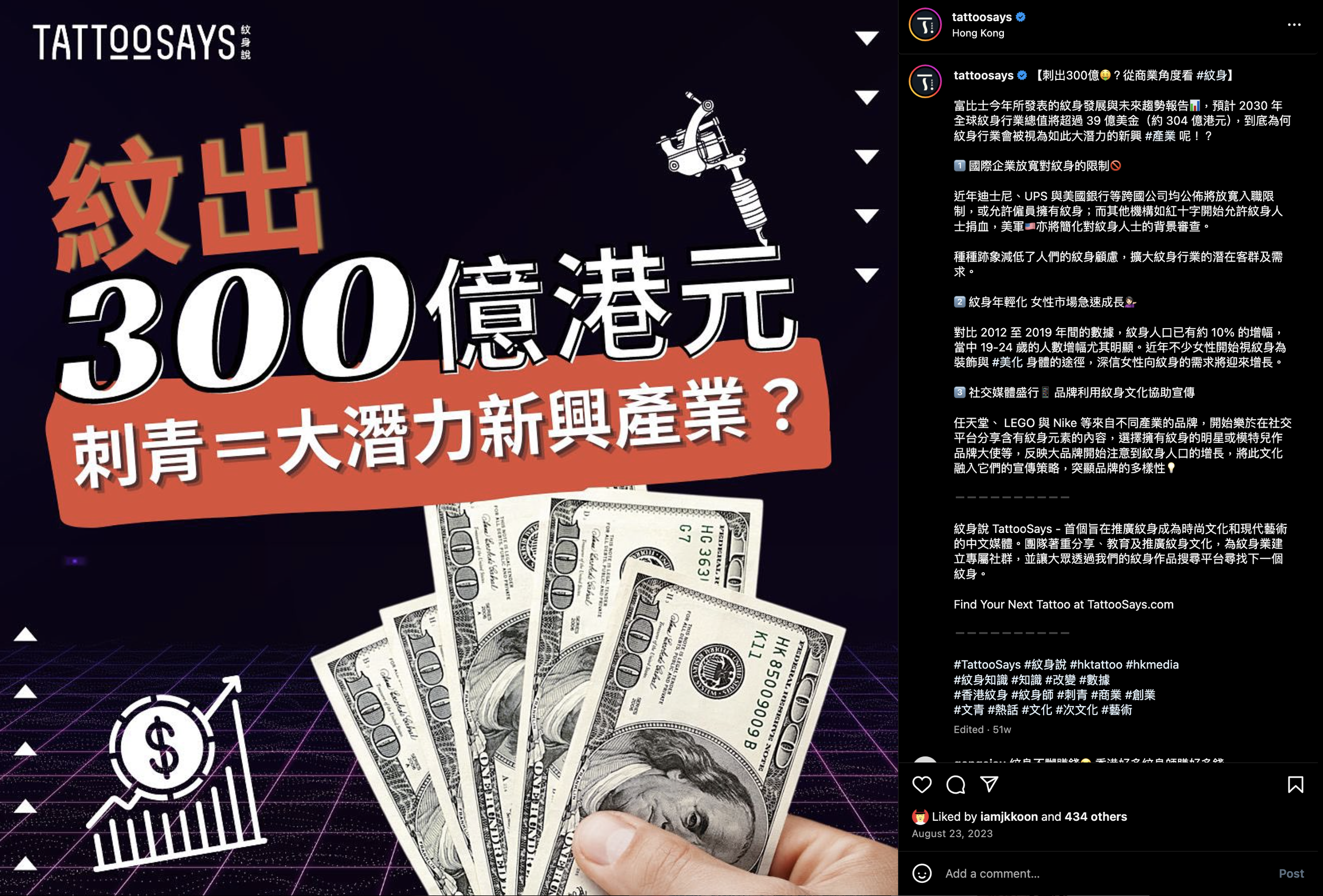
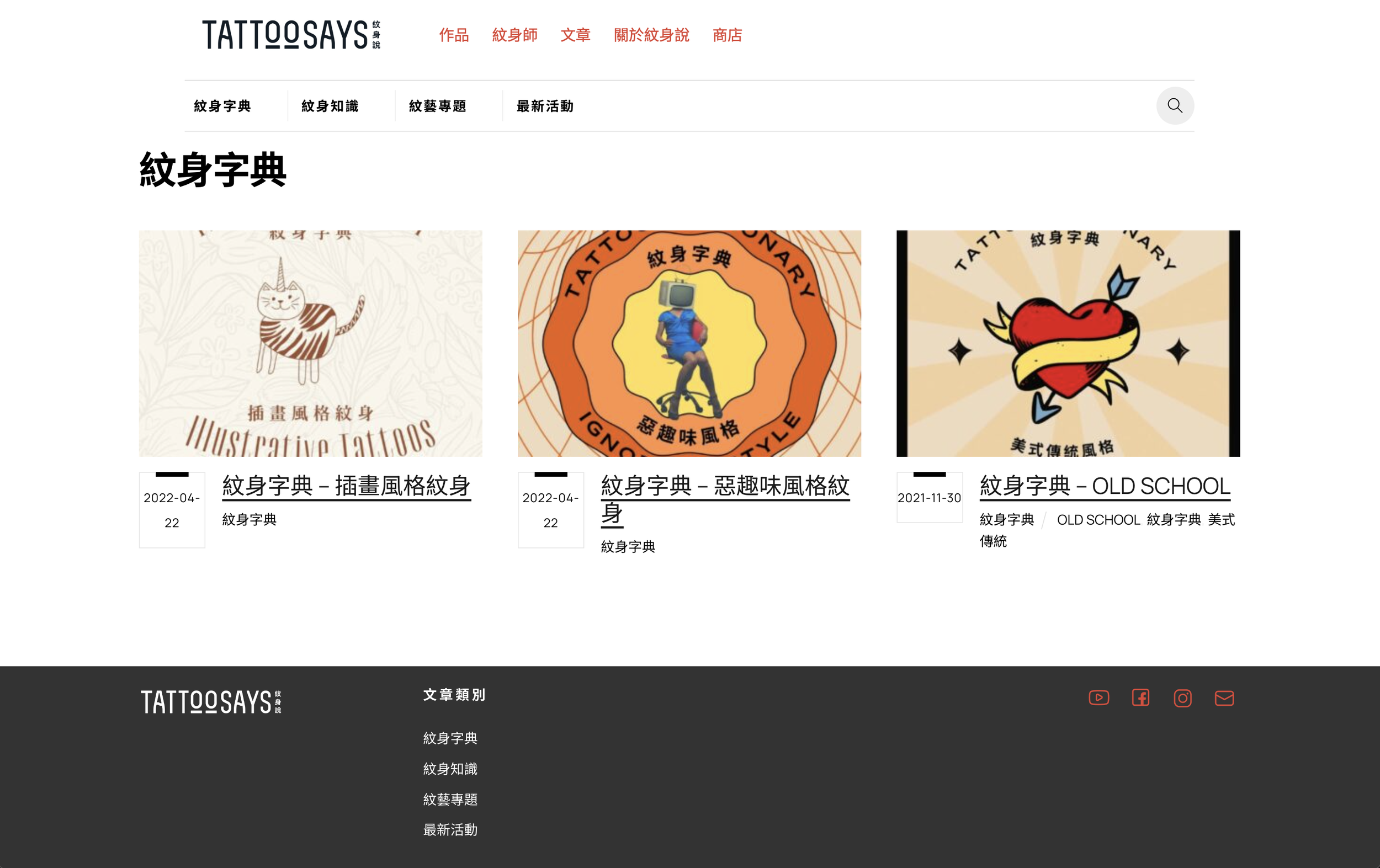
This presented an opportunity to educate the public on tattoo culture, capitalizing on "Hong Kong Tattoo" searches. Developing the platform's blog for SEO and leveraging social media could increase awareness and user engagement, ultimately extending time spent on the platform.
The objectives for the content are:
To create awareness about tattoos.
To answer people's questions about what they need to prepare for a tattoo.
Solution: platform redesign and enhancement
The platform redesign encompassed both visual and functional improvements. We implemented a comprehensive UI refresh, including a new logo, alongside key feature enhancements informed by user research insights. This update marked a strategic pivot in our platform's direction. Recognizing the predominant use of mobile and tablet devices, we prioritized responsive design optimizations for these form factors, ensuring a seamless user experience across various screen sizes.
Artist profile and tagging
Our insights revealed a nuanced approach to style categorization among tattoo artists. Artists typically employed multiple descriptions for their work, resisting singular classification. This was particularly evident when their style diverged from strict traditional forms. Notably, there was a discrepancy between artists' self-categorization and non-expert perception of styles. This insight informed our taxonomy design, emphasizing the need for a flexible, multi-faceted categorization system that bridged the gap between artist and user understanding.
Tagging
Half of the artists struggled with tag creation, and they were accustomed to Instagram-like tagging. Issues included unfamiliarity with available tags, difficulty in finding appropriate tags, and keyword mismatches (e.g., "black&grey" vs. "blackwork").
Before
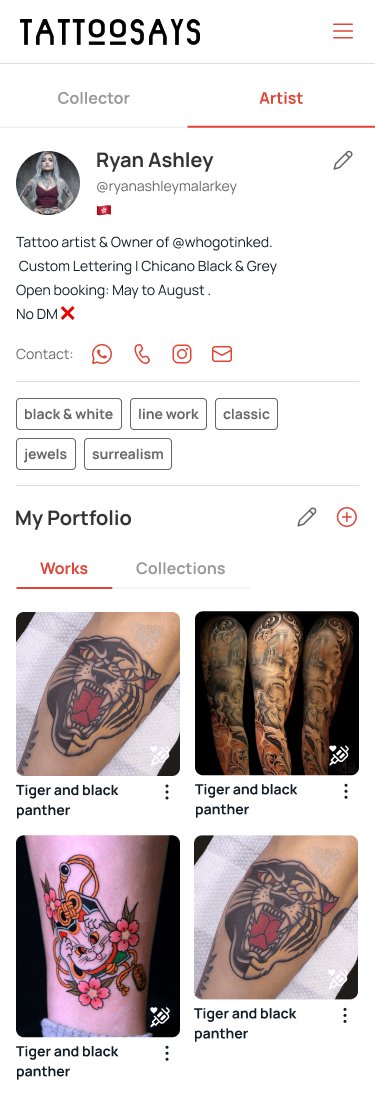
Artist Profile
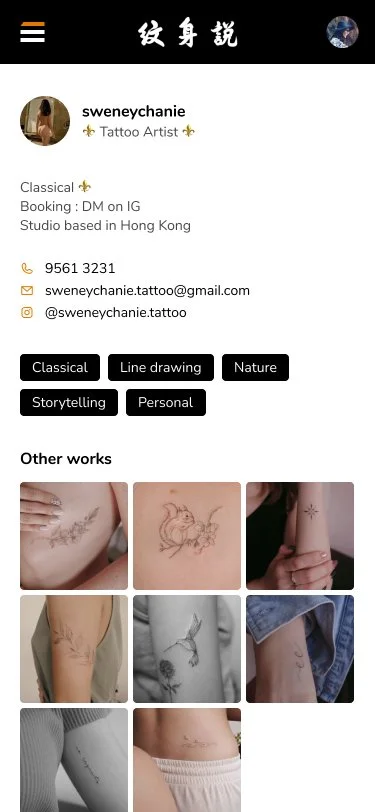
The artist profile did not use a free-text tagging system, which often resulted in users being unable to find matching tags. Additionally, the database lacked a sufficient number of tags.
Artwork upload
After: Version 2.0
Artist Profile
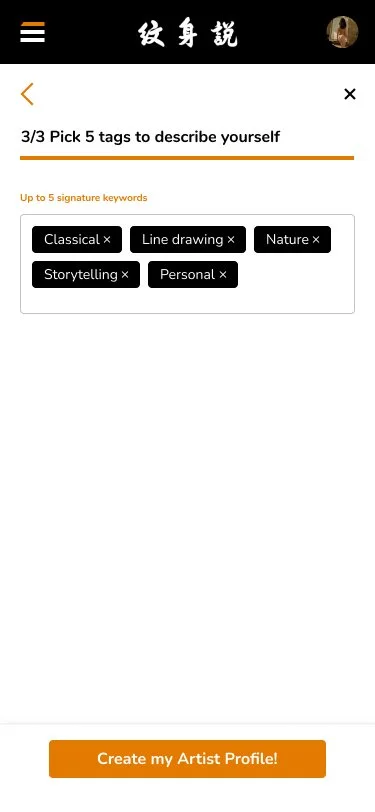
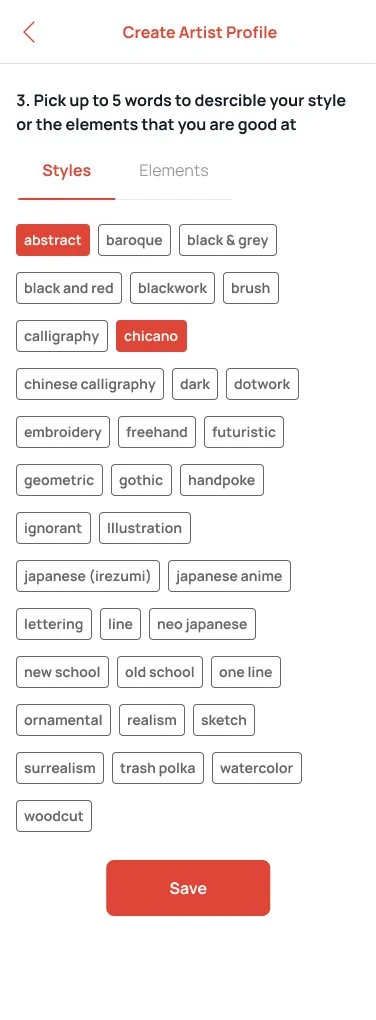
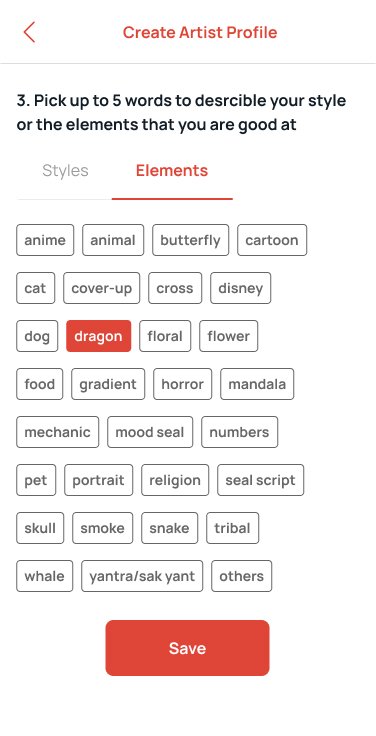
We chose not to implement a free tagging system like Instagram's, as it would likely have generated numerous unused tags from the outset. Instead, we created a controlled environment. For artist profiles, we compiled a comprehensive list of tags, divided into two categories: general tags and specific elements. Artists could directly select the tags that best describe their work. Additionally, administrators could add new tags through the admin panel.
Artwork upload
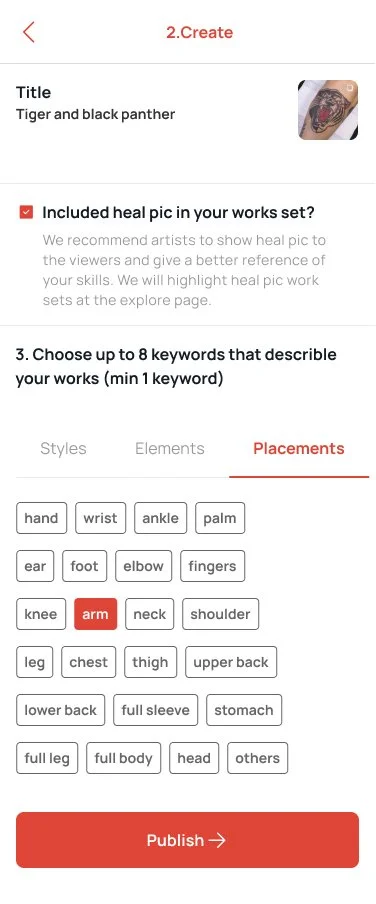
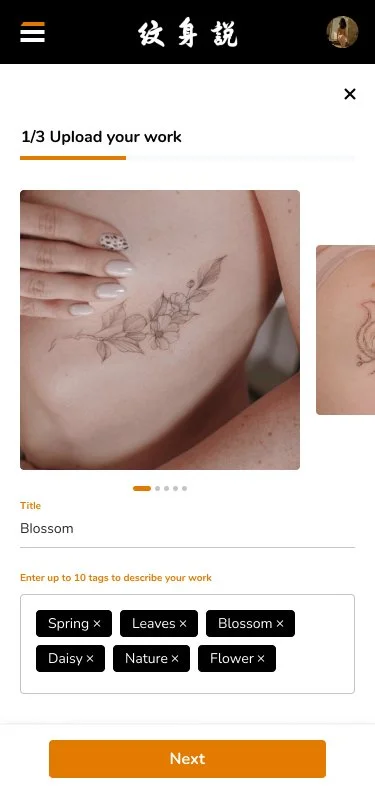
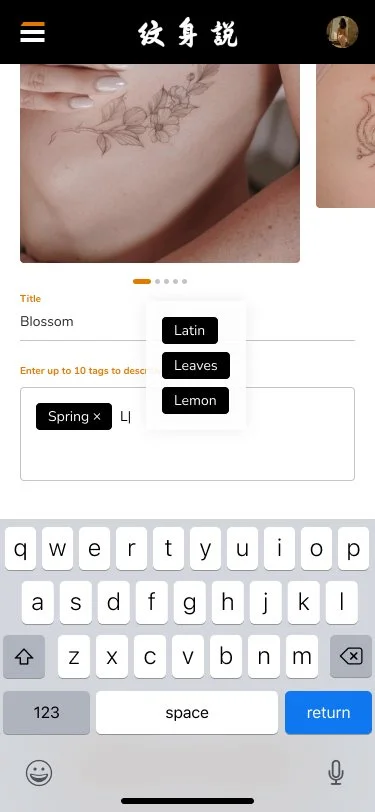
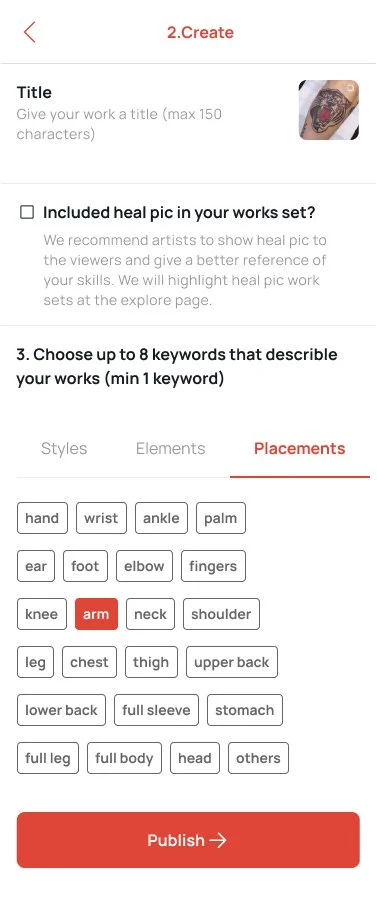
We compiled a comprehensive list of tags, divided into three categories: style, subject, and placements. Artists could directly select up to 8 keywords that best described their work from these categories.
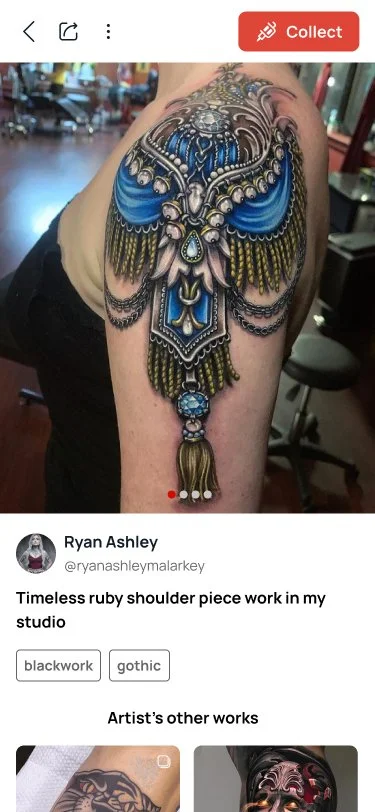
Search and Filtering
One of the key functions of this platform was to enable tattoo enthusiasts to search for tattoo artists and styles they desired.
Our interview insights revealed that laymen, who may have lacked an art or tattoo background, tended to use simpler terms to express what they saw or wanted. They might not have been able to use tattoo-specific terminology to describe styles, which could lead to misunderstandings between artists and customers. Therefore, implementing a more diverse filter and search function was crucial for enhancing the user experience.
Before
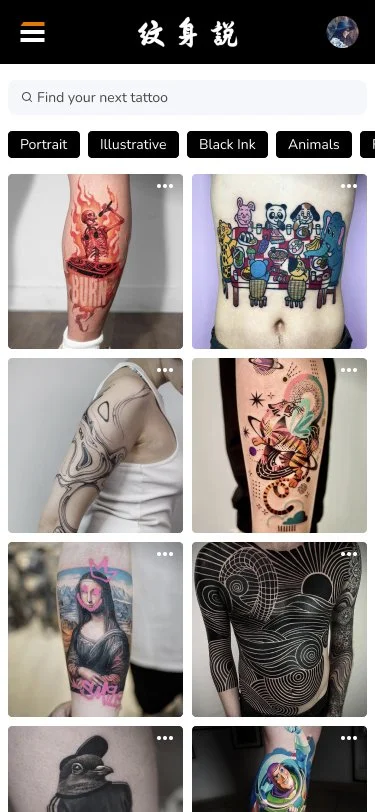
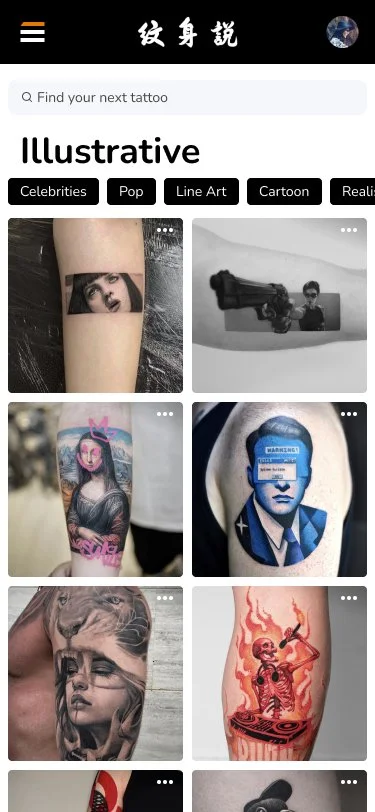
Filtering
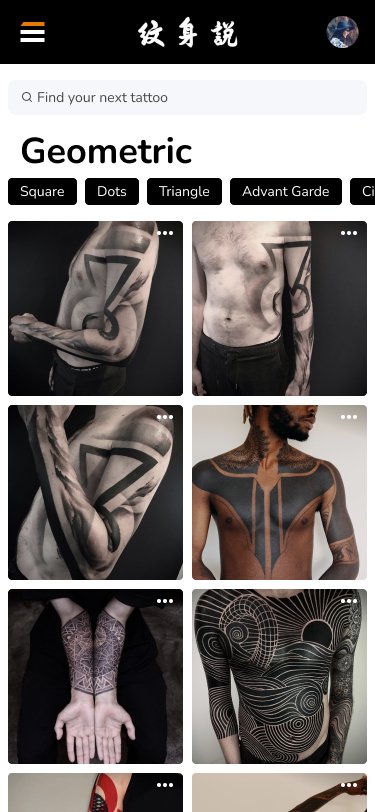
It was difficult to view all of the filters at once, and users had to scroll to see them all.
Search function
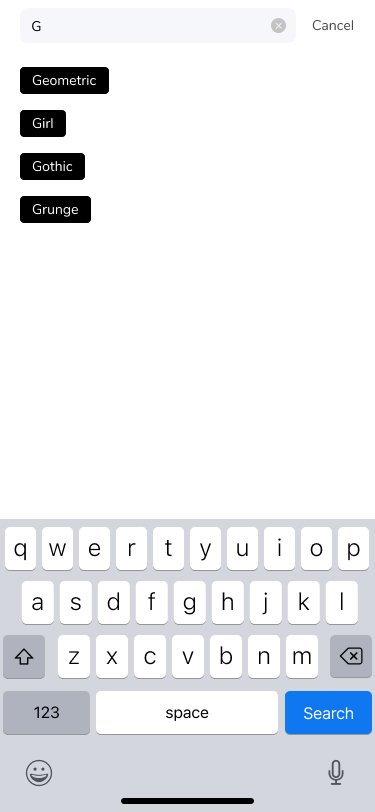
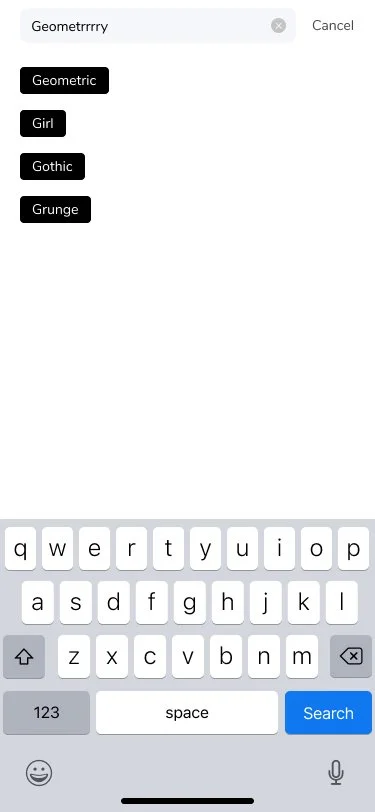
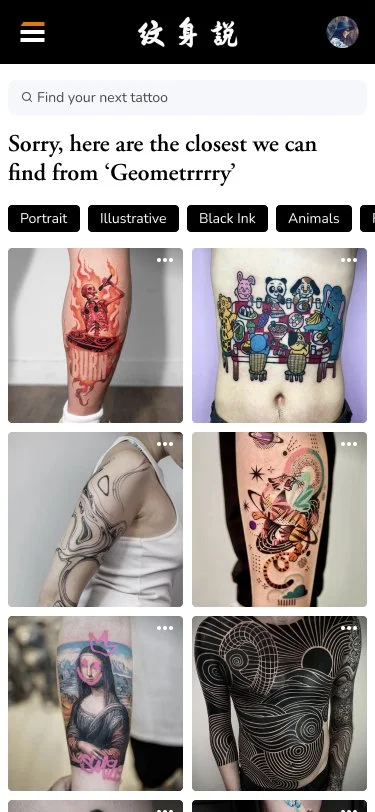
The system does not support multiple style tags. Additionally, when the system cannot find matching results, the search suggestion displays random outcomes.
After: Version 2.0
Filtering
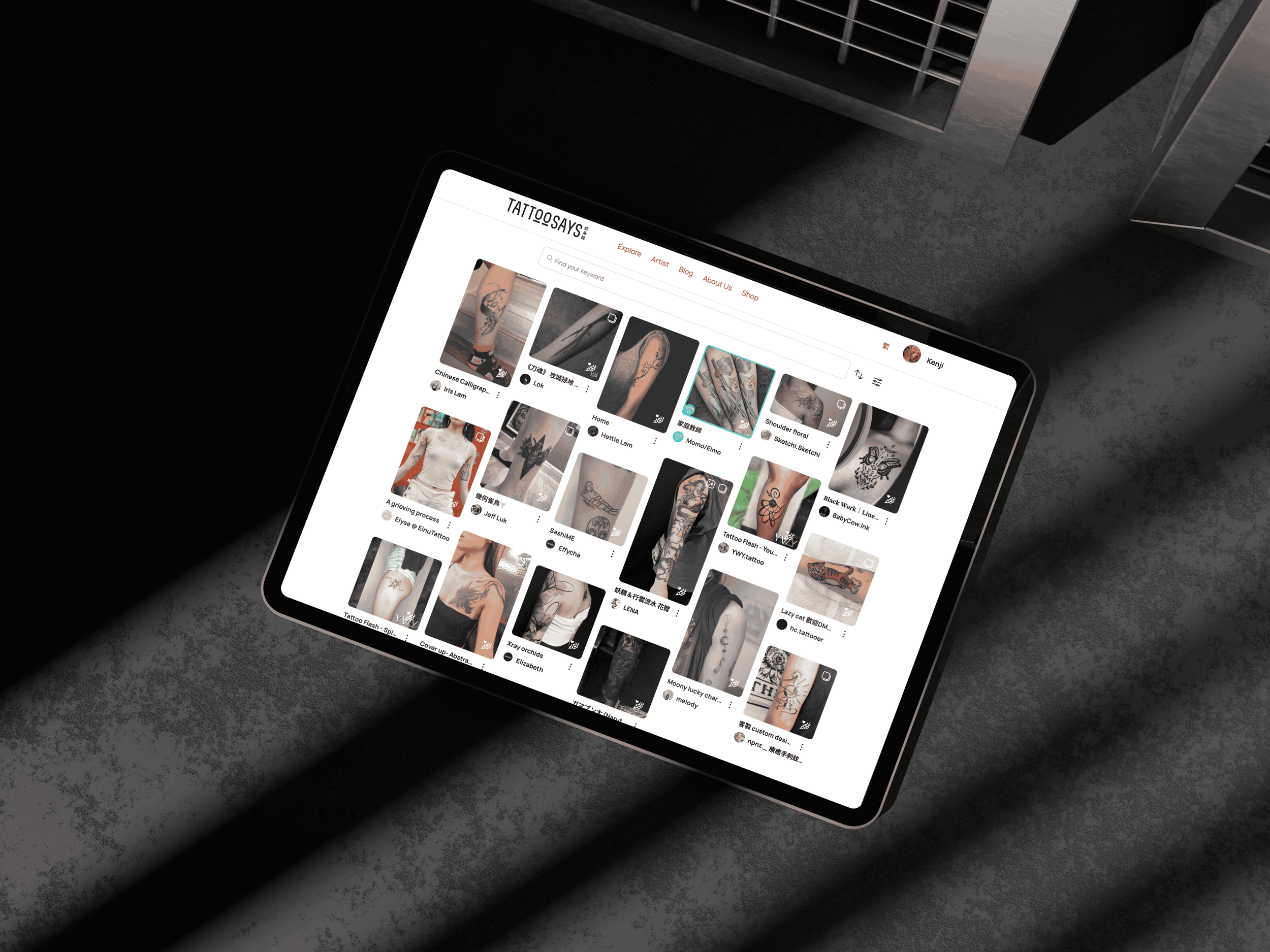
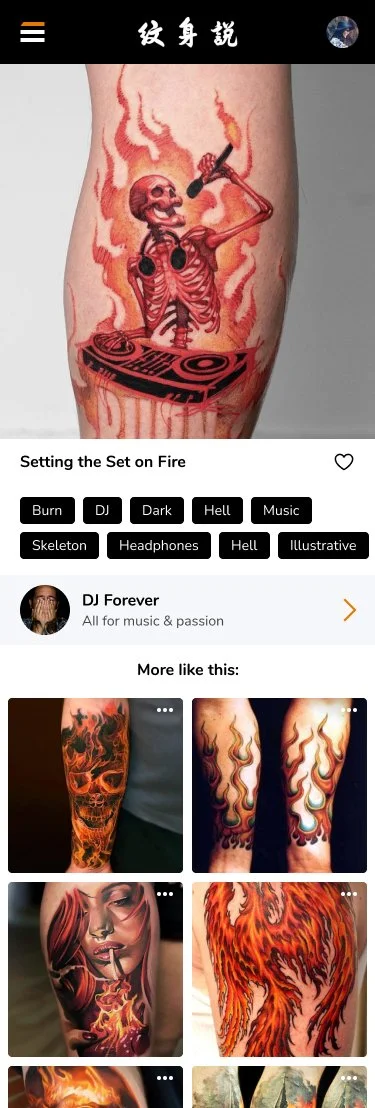
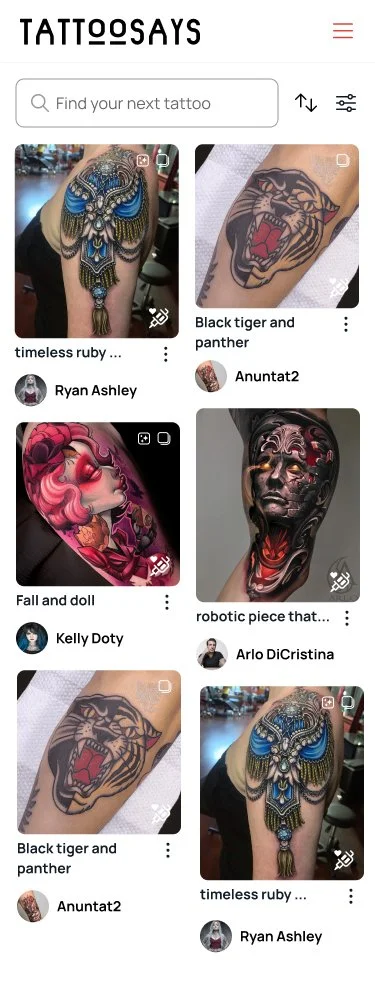
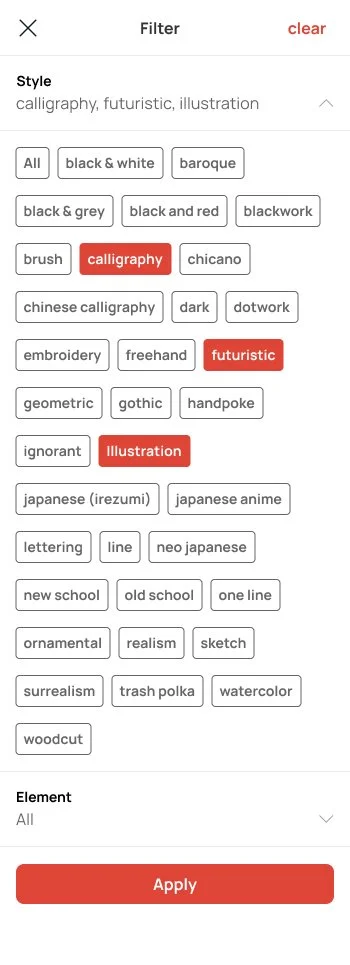
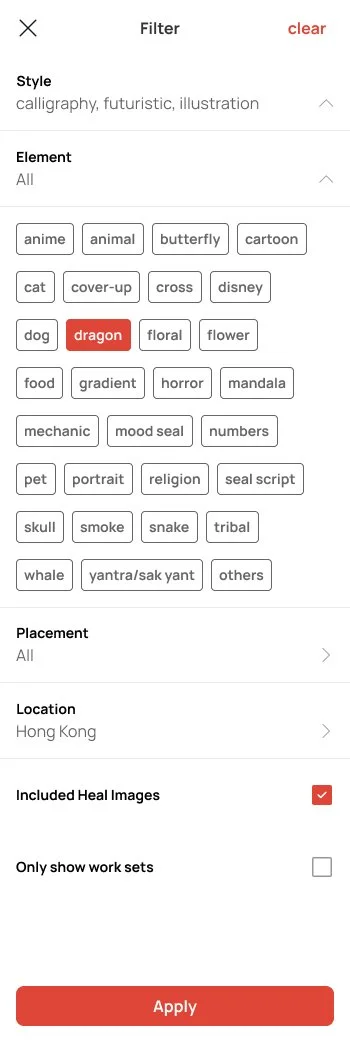
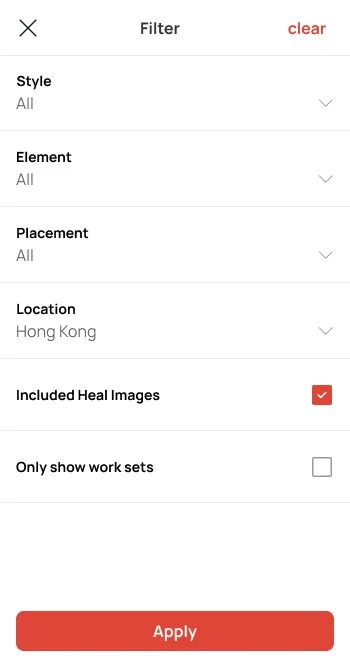
The tattoo work tag function had been revamped simultaneously and was now incorporated into the filtering system. The new filter function was located next to the search bar, following a common search pattern. It allowed users to mix and match different filter types and displayed related results accordingly. This enhanced functionality was more suitable for tattoo enthusiasts of various levels, enabling them to use different types of filters based on their needs and desired body placements.
Search result
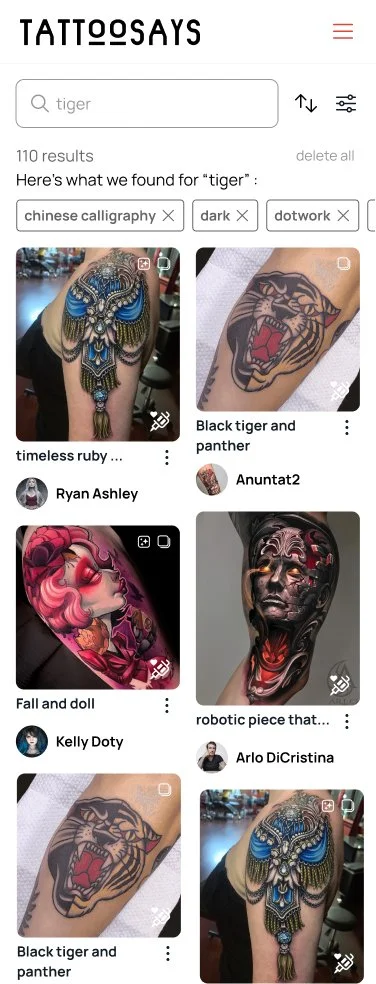
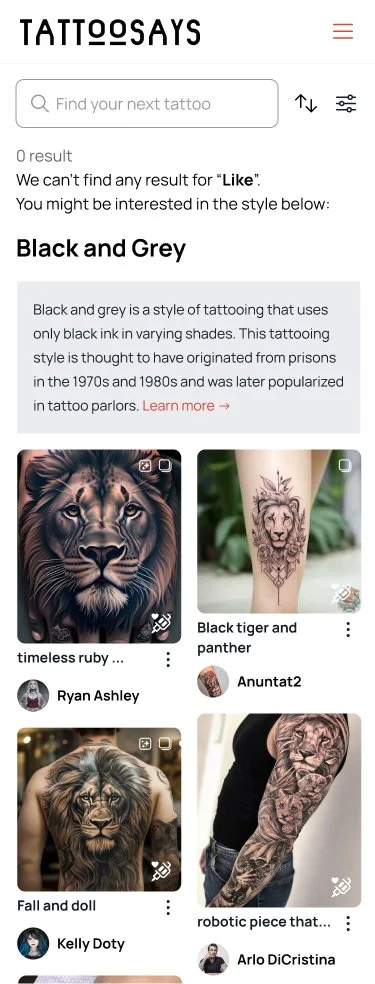
Users viewed Tattoosays as an educational resource platform that helped promote tattoo culture. Beyond searching for their next desired style, we aimed to increase user engagement and time spent on the platform by providing more educational tattoo information. To achieve this, we had fine-tuned the search results:
We maximized search functionality by allowing combined filter and keyword searches.
For each style search, we provided a brief description detailing the history and characteristics of the style. This enabled tattoo enthusiasts to learn something new as they explored different styles.
When users could not find their desired results, instead of displaying random outcomes, we suggested new styles. This approach served an educational purpose and enhanced the user's exploration experience.
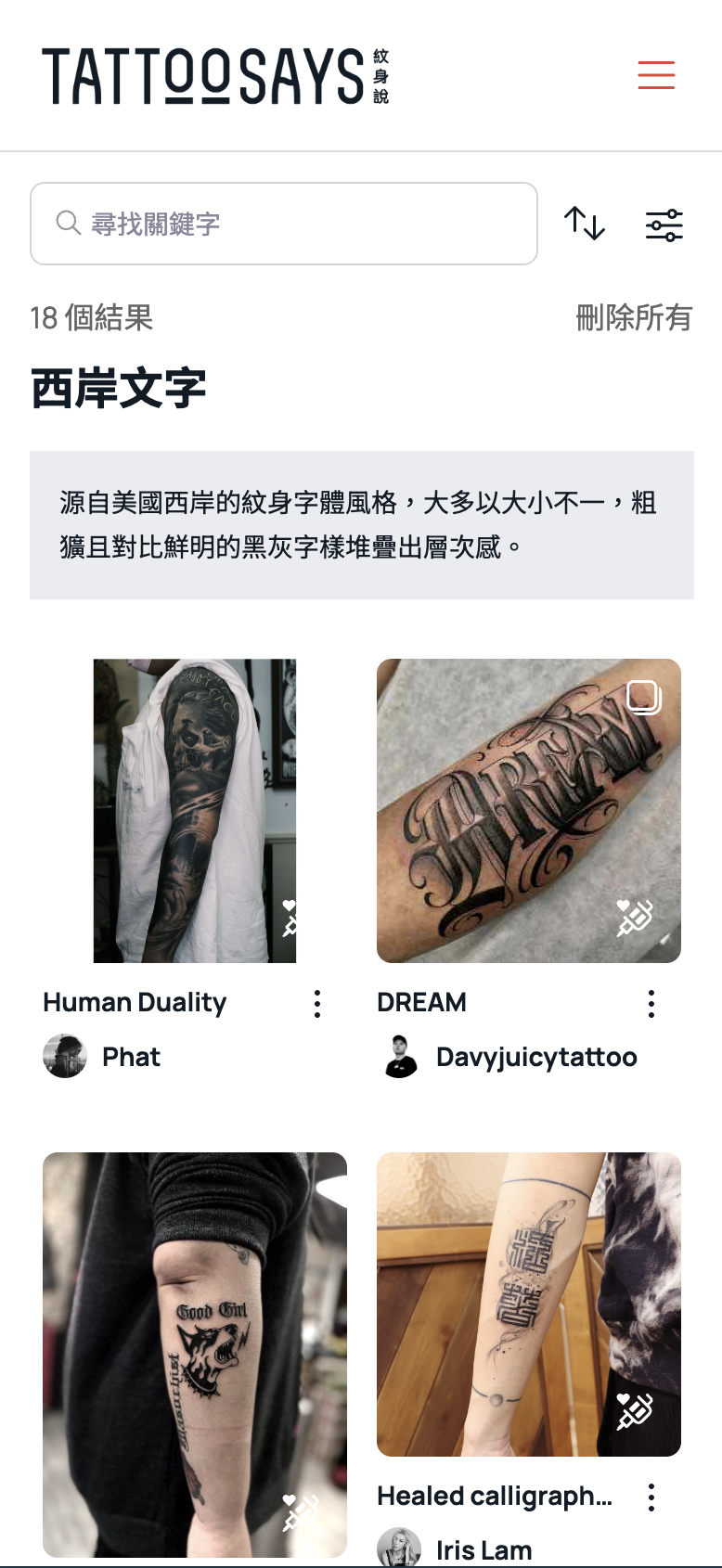
MVP Approach for The Healed Tattoo Image Feature and Paired with Educational Content Plan
A healed tattoo photo showed a tattoo once it was fully healed, accurately representing the artist's work quality and showcasing their skills. However, our interview insights suggested limited benefits in adding this feature to the platform.
Key challenges include:
The general public lacked education on what to look for in these images.
Tattoo artists might not have proactively collected healed photos from clients, and image quality couldn't be consistently controlled.
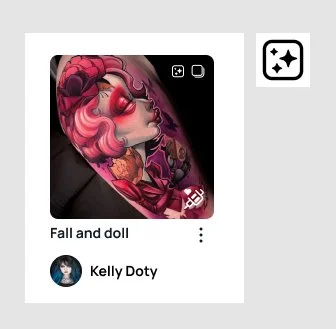
Despite these challenges, the owners are keen to explore this feature. Therefore, we decide to implement it as an MVP with minimal effort. We leverage the existing "image set" feature: when a tattoo artist uploads "before and after" healing pictures for comparison, they can tag it as a "healed tattoo picture." These tagged images will be displayed directly on the explore page for differentiation.
This approach served as a starting point to encourage tattoo artists to upload more healed tattoo pictures and created an opportunity to develop educational content for the general public.